
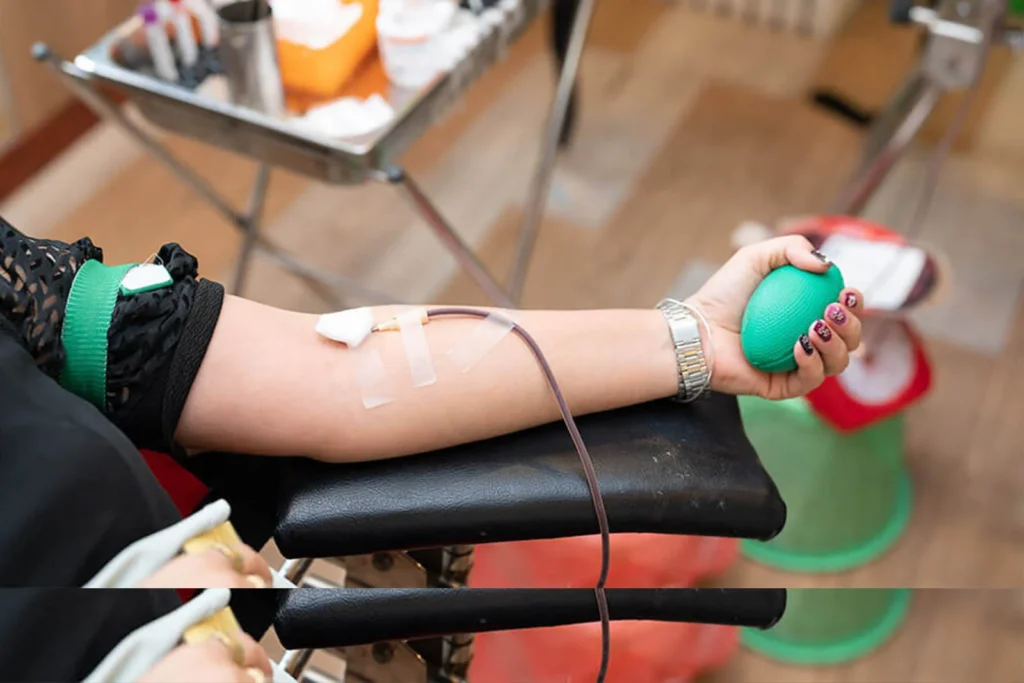
Blood Donation (रक्त दान)
Blood donation (रक्त दान)
Blood donation in India is a safe, 10–20 minute process that saves lives, requiring donors to be 18–65 years old, weigh over 45 kg, and be in good health. One unit of blood can save up to three lives. Men can donate every 3 months and women every 4 months.
Eligibility: Minimum 18 years old, >45 kg weight, healthy, and hemoglobin $\geq$ 12.5 g/dL.
Process: Registration, brief medical checkup, donation (5-10 minutes), and resting with refreshments.
Frequency: Whole blood can be donated every 3 months (90 days).
* Blood Types in Demand: O-negative (universal donor) and AB-positive (plasma) are frequently needed.
Safety: Only sterile, disposable kits are used; it is impossible to contract AIDS or other diseases from donating.
Post- Donation: The body replenishes the blood volume within 24-48 hours.
Where to Donate
* eRaktKosh: Centralized government website to locate blood banks
* Indian Red Cross Society (IRCS): Major voluntary donation centers.
* Friends2Support: A voluntary donor network
* Hospitals/Blood Banks: Major private and government hospitals.
Pre-Donation Guidelines
* Avoid alcohol and smoking 24 hours prior.
* Do not donate if you have taken antibiotics or had a fever in the last week.
* Ensure proper sleep the night before.
* Inform the technician about any medical history, including allergies.
Important Reminders
* National Voluntary Blood Donation Day: Observed on 1st October.
Donation is Free: Voluntary donation is encouraged. Do not pay middlemen for blood